
Why SEO is now bigger than Google in the age of AI search
Search has quietly outgrown Google.
People now ask questions and discover products through AI assistants, social platforms, voice devices, marketplaces, and app stores. That shift is rewriting the rules of SEO. If you’re still thinking only in terms of “ranking on Google,” you’re already behind.
This article breaks down how search is changing, what AI really looks for, and how to adapt your marketing so your brand shows up everywhere people search.
Search is now everywhere, not just on Google
Google is still huge, with roughly 13.7 billion searches a day and around 5 trillion searches a year. But it only controls about 27% of global search activity.
The other 73% happens across a growing ecosystem of platforms:
Instagram: over 6 billion searches per day
YouTube: over 3 billion searches per day
Amazon: over 3 billion searches per day
Apple App Store: over 500 million searches per day
AI assistants and tools: ChatGPT, Perplexity, and others
Social platforms: Facebook, TikTok, Snapchat, Reddit, and more
On top of that, these platforms are increasingly powered by AI. They’re not just matching keywords anymore; they’re understanding intent, context, and entities (brands, people, products) across the web.
This is why the old definition of SEO—"rank higher on Google"—is too small. You now need to think in terms of search everywhere optimization: showing up wherever people search, in whatever format they search (text, voice, video, chat).
From SEO to “search everywhere optimization”
In the past, SEO meant optimizing web pages for Google (and maybe Bing). Today, you need to be visible across:
AI assistants (ChatGPT, Gemini, Perplexity, etc.)
Social search (Instagram, TikTok, YouTube, Facebook)
Commerce search (Amazon, app stores, marketplace search)
Voice search (Alexa, Siri, Google Assistant)
Imagine you’re a luxury brand that sells handbags. It’s no longer enough to rank for “handbags” on Google. You also want:
Your products to appear when someone searches “handbags” on Instagram or TikTok
Your brand to be recommended when someone asks ChatGPT for “the best luxury handbag brands”
Your items to show up when someone asks Alexa to “order a leather handbag”
That’s the new SEO: being present across multiple AI-powered surfaces, not just one search engine.
What authority looks like in an AI-driven world
Traditional SEO has long used the E‑E‑A‑T framework: Experience, Expertise, Authority, and Trust. That still matters. A doctor writing about medical topics is more authoritative than a marketer, and a seasoned marketer is more authoritative than a doctor writing about marketing.
But AI systems add new layers on top of that. They look beyond your site and ask: how does the world talk about you?
Key authority signals AI cares about
Brand mentions: How often is your brand mentioned across the web compared to competitors? Even if they’re older and have more total mentions, are you growing faster month over month? That growth trend matters.
Sentiment and reviews: AI can read reviews and comments and understand whether people are happy or frustrated. It’s not just “how many reviews,” but also “how positive are they?”
Third-party listicles and rankings: When AI answers questions like “best project management tools” or “top electric cars,” it often pulls from list posts: “10 best…”, “Top 7…”, and so on. If your brand appears in more of these lists, you’re more likely to be recommended.
Real-world expertise and consistency: Are you consistently publishing content, speaking, teaching, or sharing insights in your domain over time? That ongoing activity reinforces your expertise.
Backlinks still matter for traditional SEO, but AI systems care at least as much about who mentions you and how they talk about you, even when there’s no link.
Brand mentions vs backlinks: what’s changing
For years, backlinks were the core off-page SEO signal. They still help you rank in classic search results. But AI search systems (ChatGPT, Perplexity, etc.) care more about brand mentions than strict link graphs.
Here’s the new reality:
Backlinks help with traditional rankings on Google and other search engines.
Brand mentions (with or without links) help AI models understand which brands are relevant, trusted, and widely discussed.
Ideally, you get both: a mention and a link. But even unlinked mentions across blogs, forums, social platforms, and news sites help train AI systems to recognize and recommend you.
How to get into AI-powered recommendations
AI assistants don’t crawl the web in real time like a search engine. They’re trained on large datasets and then updated periodically. But there are clear patterns in where they pull information from when generating recommendations.
For example, ChatGPT and similar tools tend to lean heavily on:
Wikipedia: If you or your company can legitimately qualify for a page, it’s a powerful signal.
YouTube: Educational and review-style videos are common sources.
Reddit: Not as dominant as before, but still a big source of real-world opinions and experiences.
Blogs and niche sites: Especially listicles, reviews, and how-to content.
If you want AI to recommend you when someone asks for “the best agency for Latin America expansion” or “top event planners in my city,” you need to be present in the sources AI trusts.
That means:
Contributing to or qualifying for a Wikipedia article (where appropriate)
Publishing helpful, searchable content on YouTube
Being mentioned in independent reviews and list posts
Building relationships with other creators and site owners in your niche
Events, communities, and collaborations matter here. Many of the people you meet run blogs, newsletters, or channels. Cross-promotion and co-created content can help you both show up more often in AI results.
Can you write your own “best of” listicles?
Yes—and it can help, especially in the short term.
Publishing your own “10 best X” articles and including your brand does feed AI models more structured information about what you do. But just like Google’s algorithm evolved to discount obvious self-promotion, AI systems will get better at spotting biased content.
So use a balanced approach:
Write honest, neutral comparisons on your own properties.
Work to earn mentions in independent listicles and reviews.
Focus on building a genuinely better product or service so people want to include you.
Over time, those third-party mentions will carry more weight than anything you say about yourself.
How to use AI tools to grow brand mentions
You can use AI to systematically find and close “mention gaps” between you and your competitors.
One practical workflow looks like this:
Audit your current mentions
Use an SEO tool like Ubersuggest to see where your brand is already mentioned and where your competitors are getting coverage that you’re not.Run a backlinks/mentions opportunity report
Identify sites that link to or mention your competitors but not you. These are high-potential targets for outreach.Use AI to draft outreach emails
Feed AI the context (who you are, what you offer, why you’re relevant to that site’s audience) and have it generate personalized outreach templates. You’ll still want to tweak them manually, but AI can handle the heavy lifting.Scale outreach with automation
Combine AI-written emails with tools for finding contact info and sending campaigns (e.g., email platforms like Mailchimp). Then follow up personally with the most promising opportunities.
This approach turns “getting mentioned more” from a vague goal into a repeatable process.
How AI changes content strategy (and what doesn’t change)
Many marketers assume AI can do everything: write all their content, run their campaigns, and magically grow traffic. In reality, we’re in an awkward middle phase:
Right now, people overestimate what AI can do. It’s powerful, but it still makes mistakes, hallucinates facts, and tends to regurgitate existing ideas.
Over the next 5–10 years, most people are underestimating how much AI will change workflows, jobs, and business models.
The sweet spot today is humans + AI. AI is great at:
Researching topics and competitors
Summarizing and comparing large sets of data
Drafting outlines, first drafts, and outreach emails
Finding content gaps and optimization opportunities
Humans are still better at:
Coming up with truly new ideas and angles
Understanding customers emotionally
Storytelling, nuance, and lived experience
Judging what’s actually useful vs. generic
If your content is just AI-generated summaries of what’s already out there (for example, yet another article on “banana nutrition facts”), it will blend into the noise. People and platforms reward fresh, specific, experience-based content.
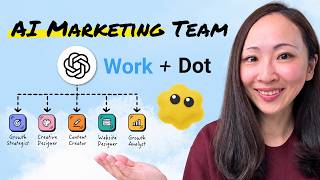
If you want to go deeper on building AI-powered marketing workflows, you may find this guide useful: how to build an AI marketing team with Claude Code.
Optimizing for social search and AI at the same time
Social platforms like Instagram, TikTok, and YouTube are now major search engines in their own right. Their AI systems analyze:
What’s said in your videos (via automatic transcription)
Your titles, descriptions, and on-screen text
Comments, likes, shares, and saves
Watch time and retention compared to similar content
To show up more often in social search results:
Say the topic clearly and early. Instead of a vague hook like “This trick doubled my business,” say “Here’s how to rank on ChatGPT in 10 minutes a day” in the first few seconds.
Create how-to and tutorial content. These formats tend to perform better in search than pure entertainment.
Use descriptive titles and captions that match what people would actually type or say.
Focus on originality. The biggest problem on social is repetition. If you’re just remixing popular trends, it’s hard to stand out.
Remember: some AI systems have data partnerships with social platforms. That means content you post on, say, TikTok may indirectly help you show up more in AI answers—even if your direct customers aren’t heavy TikTok users.
Using AI to audit and improve your social content
You can also point AI at your existing social content and ask it to analyze:
How clearly you state the topic in the first few seconds
Whether your descriptions match likely search queries
Patterns in posts with higher engagement or watch time
But the biggest lever is still talking about new things. AI can help you brainstorm and structure ideas, but you’ll need to bring your own experiences, stories, and unique angles to the table.
If you’re camera-shy or short on time, tools like AI avatar video generators (for example, HeyGen) can help you create consistent video content without being on camera for every single post.
Don’t ignore multi-language and global reach
AI translation and dubbing are quietly turning local content into global content.
Platforms like YouTube now offer automatic dubbing into multiple languages. With a few clicks, you can:
Translate your existing videos into many languages
Reach audiences in countries you’ve never marketed to
Start building brand awareness long before you actively sell there
Most of the world lives outside North America, and many markets are less saturated with content. Letting platforms auto-dub your content costs you nothing but can significantly expand your reach and future revenue potential.
Practical ways businesses are using AI in SEO and marketing
Here are a few concrete workflows you can implement right away:
1. Find and close keyword and conversion gaps
Use AI and analytics to compare:
Keywords that drive conversions from organic search
Keywords that drive conversions from paid search
Then ask: where are you strong in one channel but missing in the other? Use AI to generate content ideas for organic gaps and new keyword ideas for paid campaigns.
2. Run keyword gap analysis against competitors
Tools like Ubersuggest can show you which keywords your competitors rank for that you don’t. Export that list and feed it into an AI assistant. Ask it to:
Cluster keywords into topics
Suggest article or video ideas for each cluster
Draft outlines or content briefs for your team
This lets you quickly expand into topics your audience cares about but you haven’t covered yet. For more structured workflows like this, see how to build a free AI marketing audit team with Claude Code.
3. Update and upgrade existing content
New content isn’t your only growth lever. Search engines and users both prefer fresher, more complete content.
You can use AI to:
List all the keywords a page currently ranks for
Analyze the top competing pages for those keywords
Summarize what competitors cover that you don’t
Suggest sections, FAQs, or examples to add
Then you or your team can selectively incorporate the best ideas, refresh stats, add new insights, and republish. Often, updating a strong but outdated article can outperform publishing something brand new.
Voice search and the next generation of buyers
Voice assistants like Alexa and Siri are also powered by AI—and they’re shaping how younger generations search and shop.
Many children are growing up with voice as their default interface. They ask Alexa for songs, stories, and even order things online. Typing on a phone feels outdated to them.
That has big implications for the future:
More commerce will flow through voice commands.
Brand recall and simplicity will matter even more (“Order more of that cleaner I bought last time”).
Being the default or recommended option in voice ecosystems will be extremely valuable.
To prepare, make sure your products and brand are well-structured and clearly described on platforms that feed voice assistants (especially Amazon). Clear naming, strong reviews, and consistent branding all help.
How to think about AI in your business
One of the most important mindset shifts is this: don’t start with “What AI tools can I use?” Start with “What am I doing every day that drives revenue?”
Then:
Do the work manually first. Especially if you’re starting from scratch, you need to understand your own processes, customers, and bottlenecks.
Track what you actually do. Use a note-taking app, a spreadsheet, or even record your screen and calls. Log your repetitive tasks.
Ask AI to help you automate. Once you have a list of tasks, ask tools like ChatGPT or Gemini: “Here are the things I do every day. Which can AI help automate, and how?”
Prioritize tasks tied to revenue. Focus first on automations that help you get more leads, close more sales, or retain more customers—not just save time.
If you jump straight into tools without this grounding, you risk spending a lot of time “playing with AI” without moving your key metrics.
If AI might replace your service, build the AI
If you’re in a business that feels threatened by AI—content writing, basic coding, staff augmentation, and so on—one powerful strategy is to be the one who builds or packages the AI that replaces parts of your own service.
Ask yourself:
Which parts of my service are repetitive and rules-based?
Could I use existing AI APIs to automate those pieces?
Could I turn that into a product or hybrid service for my clients?
This is the “disrupt yourself” approach. Instead of waiting for someone else to undercut you with AI, you build the AI-enhanced version of your own business and sell that.
Focus AI on your bottom line
AI can absolutely make your life easier. But in business, the more important question is: does it help you hit your revenue and profit goals?
When you evaluate AI projects, ask:
Will this help me acquire more customers?
Will this help me increase average order value or lifetime value?
Will this help me retain more customers or reduce churn?
Will this free up time I can reinvest directly into growth activities?
If the answer is no, it might still be a nice optimization—but it shouldn’t be your priority.
SEO is no longer just about Google, and AI is no longer a “nice-to-have” experiment. Together, they’re reshaping how people discover, evaluate, and choose brands. The businesses that win will be the ones that show up everywhere people search—and use AI not just to create more content, but to build more authority, more visibility, and more revenue.




Comments
No comments yet. Be the first to share your thoughts!