
The one-person AI business model creating new millionaires
For the first time in history, one person with a laptop can outearn an entire company. Thanks to modern AI tools, you no longer need a big team, a fancy office, or investor money to build a serious business. What you do need is a clear problem to solve, the courage to start, and a smart way to let AI do most of the heavy lifting.
The new one-person AI business model
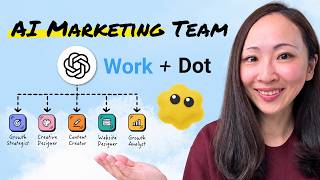
The core idea is simple: one person, one expensive problem, AI doing the work of an entire team.
Instead of hiring copywriters, editors, assistants, analysts, and designers, you use AI to handle 80–90% of the execution while you bring judgment, relationships, and strategy. This is the model behind many of the new solo millionaires in 2026.
One real-world example is a solo founder who built an AI-powered chat interface that made using large language models faster and easier for power users. No big team, no office, no investors—just a focused product solving a specific problem. That single tool now generates well over six figures a month.
You can apply the same model even if you’re not a coder. Instead of building a product, you can offer a high-value service powered by AI. The structure is the same: pick a painful problem, use AI to deliver what used to take a whole team, and keep your operation intentionally lean.
Step 1: Pick one specific, expensive problem
The biggest mistake new AI entrepreneurs make is trying to help everyone with everything. They call themselves “AI consultants” and offer a little bit of automation, a little bit of content, a little bit of strategy—and end up being forgettable.
The money is in being laser specific.
Your job is to choose:
• One type of person or business
• One expensive headache they already pay to solve
Think of problems like:
• Small law firms drowning in client intake paperwork and repetitive emails
• Real estate agents who need listing descriptions, follow-up emails, and social content every week
• Local restaurants that need their social media and promotions handled consistently
• E‑commerce brands that need hundreds of product descriptions and FAQ answers
• Service businesses answering the same customer questions all day long
The keyword is expensive. You want a problem where money is already being spent—on agencies, staff, or contractors. That means demand is proven. You’re not inventing a market; you’re entering an existing one and doing the work faster, better, and cheaper with AI.
A simple way to find your idea is to look around and ask:
• What are businesses already hiring people to do that is boring, repetitive, and time-consuming?
• What tasks clearly follow patterns—writing, answering questions, summarizing, reporting, editing—that AI can now handle in minutes?
Examples include writing product descriptions, editing videos, building simple reports, following up with leads, or drafting emails. Each of these can be turned into a focused AI-powered offer.
Write your idea in a single sentence: “I help [specific person] solve [one expensive problem].” If you can’t fit it into one sentence, it’s still too broad—keep sharpening.
Step 2: Start high-ticket, not cheap
Many people assume they need to start with a $20 ebook, a $50 mini-course, or a low-priced digital product. That path usually leads to burnout: you need thousands of customers and a big marketing machine just to make a living.
Flip the math. Start high-ticket from day one.
Imagine you charge $2,000 per month for an AI-powered service:
• 4 clients = $8,000/month ≈ $96,000/year
• 8 clients = $16,000/month ≈ $192,000/year
You can manage that number of clients from your kitchen table.
High-ticket has three major advantages:
• Fewer clients, more focus: It’s easier to serve 5–10 serious clients than thousands of tiny buyers.
• Better results: When people pay more, they show up, do the work, and value the outcome.
• Huge margins: AI does most of the execution, so your costs stay low and you keep most of the revenue.
With a small, high-value client base, you can overdeliver: know their business, respond quickly, and create an experience that keeps them for years and brings referrals.
Step 3: Let AI do the work of a team
The engine of this model is leverage. AI lets one person do what used to require an entire department.
Think of your workflow through three filters:
1. Eliminate
Cut anything that doesn’t move the needle. Many tasks are just “busy work” that nobody values. Be ruthless about removing them.
2. Automate with AI
Anything repetitive should be handled by AI. For example:
• Turning a long video into 10–20 short clips
• Transcribing calls so no ideas are lost
• Drafting outreach messages and follow-up emails
• Writing first drafts of blog posts, social posts, and newsletters
• Organizing research and summarizing documents
Modern AI tools can handle all of this in minutes. If you want a broader view of what’s possible, check out top AI tools for business in 2026 to see how others are using AI across marketing, operations, and support.
3. Delegate what AI can’t or shouldn’t do
For the small set of tasks that truly require a human touch and aren’t worth your time, hire light. A part-time assistant for 5–10 hours a week can remove a lot of friction without turning your business into a management headache.
When you stack these three together, your clients will feel like they’re working with a full-service agency. In reality, it’s you, a laptop, and a smart AI stack.
Step 4: Design simple AI-powered services
You don’t need to build a full software product to win with AI. You can package simple, clear services where AI does most of the work and you provide quality control and strategy.
Example service bundle for a small business client:
• 30 social media posts per month
• 1 weekly email newsletter
• AI-assisted responses to common customer emails
Here’s how it might work in practice:
1. You collect brand guidelines, past content, and examples of their tone of voice.
2. You feed that into your AI tools to generate first drafts of posts, emails, and responses.
3. You edit, refine, and approve everything to make sure it’s accurate, on-brand, and effective.
What used to require three different hires (social media manager, copywriter, support rep) can now be delivered by one person using AI. Your hard costs are a few dollars in AI usage and a few focused hours of your time.
If you want more structured inspiration on AI business models, you may also like this guide on making money with Claude AI using simple business models.
Step 5: Build relationships, not just an audience
You don’t need a million followers to build a high-income AI business. You need the right relationships.
Instead of chasing views, focus on a small list of people who can meaningfully move your business forward—partners, connectors, and clients.
One powerful approach is to create a “Money 50” list:
• Identify 50 people who already have the audience or customer base you want to reach.
• These are not just potential clients; they’re people who can introduce you to dozens or hundreds of clients over time.
Then, lead with value:
• Invite them to be a guest on a simple podcast, livestream, or interview series.
• Use your AI skills to create content from that conversation—clips, posts, quotes—and make them look great.
• Share everything with them so they can post it too.
While most people show up asking for time, money, or favors, you show up offering visibility and value. That difference makes you memorable and opens doors that “cold DMs” rarely do.
Step 6: Stay lean on purpose
The goal isn’t to build the biggest company. The goal is to keep the most freedom and profit.
Big teams come with big problems: payroll, management, office costs, and constant pressure to feed the machine. The magic of this AI era is that you can make a fortune while staying small.
That means:
• No fancy office
• No bloated software stack
• No unnecessary full-time hires
• Minimal fixed costs
Lean is not a limitation—it’s your advantage. When your monthly expenses are low, you can:
• Survive slow months without panic
• Say no to bad-fit clients
• Take smart risks
• Pivot quickly as AI tools improve
Because AI lets one person carry the load of an entire team, the smaller your operation, the more of the upside you keep.
Step 7: Start before you feel ready
Knowing all of this won’t change your life. Starting will.
Most people get stuck waiting:
• Waiting to feel “qualified”
• Waiting for the perfect idea
• Waiting to learn just a bit more
Meanwhile, others with less talent and less information are taking messy action and learning in public. They ship small offers, talk to real customers, and improve as they go—and they’re the ones who end up ahead.
Here’s a simple assignment to get moving this week:
1. Pick one specific, expensive problem you can help solve.
2. Write one clear, high-ticket offer around that problem.
3. Have one real conversation with someone who might pay for it.
No website, no logo, no elaborate business plan. Just an offer and a conversation.
The AI tools you need are already available—often free or very cheap. The window where this model is wide open and relatively uncrowded is right now. A year from now, far more people will be competing for the same opportunities.
The advantage goes to the person who starts before it’s obvious.
Putting it all together
The new AI-powered solo business model boils down to a simple formula:
• Pick one expensive problem for a specific type of client
• Charge real money to solve it
• Use AI to do the work of a full team
• Build a few key relationships instead of chasing followers
• Stay lean so you keep your freedom and your profit
• Start now, before you feel ready
You don’t need permission, a degree, or investor funding. You need a decision and a first step. In 2026, the people who act on this will look back on this year as the moment everything changed for them.
The tools are here. The opportunity is here. The only question left is whether you’ll use them.



Comments
No comments yet. Be the first to share your thoughts!