
How AI compressed 160 years of aging research into a few years
What happens when cutting-edge AI collides with cutting-edge aging research? You get a field that’s moving so fast, even the scientists are struggling to keep up.
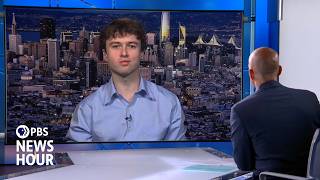
In this conversation, a leading aging researcher explains how AI has effectively compressed more than a century of lab work into just a few years, why he thinks aging is an information problem, and how his lab is using AI to search for a true age-reversing drug.
AI Turned a 160-Year Experiment Into a Few Years
One of the biggest bottlenecks in drug discovery is simply time. Traditionally, if you wanted to find a molecule that affects a specific protein, you had to physically make and test each candidate in the lab. Pharmaceutical companies might screen a few million compounds over years.
Using modern AI and massive compute, Sinclair’s team has virtually screened around 8 billion molecules to find candidates that could reverse cellular aging. An AI system estimates that, without these tools, this search would have taken roughly 160 years of manual work and cost billions of dollars.
The goal is bold: replace an expensive gene therapy that can reverse aging in animals with a simple drug—a pill, cream, or drink—that can trigger the same rejuvenation pathways in humans.
From Protein Structures to Virtual Drug Screens
A key enabler of this speed-up is AI’s progress in understanding proteins. Thanks to work like DeepMind’s AlphaFold, researchers now have predicted 3D structures for essentially all human proteins.
With those structures in hand, AI models can perform “virtual docking” at scale. They simulate how billions (and soon effectively unlimited numbers) of small molecules might fit into the shapes and charge patterns of protein targets, then rank which ones are most likely to bind and change their behavior.
That means instead of synthesizing and testing thousands of chemicals in wet labs, researchers can let AI narrow the field to the most promising hits, then test only a much smaller set in cells.
Training AI to See Cellular Aging
Drug screening is only half the story. Sinclair’s lab also built its own AI system to visually recognize aging inside human cells.
They grow human cells from young and old donors, stain them with fluorescent dyes, and capture high-resolution images. These images show structures, shapes, and internal activity inside the cells. The team then trained a custom model from scratch at Harvard to classify cells as “young” or “old” based purely on those visual patterns.
After learning from millions of cell images, the model can now look at new cells and accurately estimate their biological age—without being told anything about the donor. This becomes a powerful feedback loop: expose old cells to candidate molecules, re-image them, and let the AI judge whether they now look more like young cells.
This type of AI scientist—able to discover patterns in raw biological data and propose new models—is starting to appear more broadly in research. If you want to see how far this idea is being pushed, check out how one group built an AI system that wrote its own scientific paper.
Aging as an Information Problem
Underpinning all of this is a specific theory of aging that Sinclair’s lab has been testing for decades: aging is fundamentally a loss of information inside cells.
Every cell in your body contains the same DNA, but different cell types (skin, nerve, liver) behave differently because they read different sets of genes. This gene-reading program is controlled by the “epigenome”—chemical tags and structural changes on DNA and its packaging proteins that tell the cell which genes to turn on or off.
One of the most important tags is DNA methylation. You can think of methyl groups as tiny chemical flags attached to the DNA “ladder.” When a gene region is heavily methylated, the cell tends to ignore it. When it’s unmethylated and the DNA is open, the cell reads it and makes proteins.
Over time, due to stress and DNA damage, these methylation patterns drift. Cells start reading the wrong “music”: skin cells turn on some nerve genes, kidney cells start looking more like liver cells, and overall function declines. This drift can be measured as an “epigenetic clock,” and those clocks correlate strongly with disease risk and mortality.
Breaking and Rewriting the Cellular “CD”
To test whether epigenetic information loss actually causes aging, Sinclair’s team did a striking experiment in mice. They inserted a special enzyme from slime mold that makes a small, controlled number of cuts in the mouse’s DNA. These cuts are not enough to kill the animal, but they are enough to summon repair proteins called sirtuins away from their normal job of maintaining epigenetic patterns.
After a few weeks of this controlled DNA damage, the mice looked and behaved like old mice, and their methylation clocks showed they had aged about 50% faster. Crucially, the pattern of aging was indistinguishable from natural aging—just accelerated.
In a separate set of experiments, they then showed the reverse: by activating three specific genes (Oct4, Sox2, Klf4—together called OSK), they could reset the epigenetic clock in cells and tissues, making them functionally younger again. This was published in top journals and demonstrated in mice and monkeys.
That leads to the lab’s working hypothesis: cells carry a “backup copy” of their youthful epigenetic state—what Claude Shannon would have called an “observer” in information theory terms. The OSK program, or chemicals that mimic it, seems to access that backup and restore the original settings without erasing cell identity.
From Gene Therapy to an Age-Reversing Pill
Right now, the most powerful age-reversal effects in animals come from introducing those three OSK genes into cells, then turning them on for a controlled period. In the eye, this gene delivery can restore vision in old mice and monkeys by regenerating the optic nerve and rejuvenating retinal cells.
But gene therapy is invasive and extremely expensive. The big push now is to find small molecules that can trigger the same rejuvenation program without needing to insert new genes.
In mice, Sinclair’s group has already identified a three-chemical cocktail that, given orally for just four weeks, appears to de-age multiple tissues. Treated mice perform better on tests of strength, balance, and memory, and their epigenetic clocks move in a younger direction.
AI is now being used to go one step further: find a single, more potent molecule—ideally one that is natural or already present in the human food supply—that can do the job of those three chemicals. The hope is to eventually have a safe, affordable pill or drink that people could take periodically to slow or reverse aspects of aging.
Testing on Mini Organs: Brains, Skin, and Uterus
Before anything goes into humans, the team is testing these molecules in increasingly realistic human models grown in the lab.
They can now take human cells, reprogram them into stem cells, and grow them into three-dimensional “organoids”—miniature versions of organs that mimic real structure and function:
Mini brains: These organoids develop recognizable brain regions and even show electrical activity. As they “age,” their firing patterns slow down. When exposed to the rejuvenation cocktail, their activity increases again, suggesting functional de-aging.
Skin: The lab grows full-thickness human skin and then ages it. Treatment can thicken thinning skin and reduce features associated with aging. This is a natural target for early consumer products like creams or topicals.
Uterus: They are also growing 3D uterine tissue to explore whether age-related fertility decline can be reversed. Earlier work in mice showed that boosting NAD (a molecule that activates sirtuins) could restore fertility in very old female mice and produce healthy offspring.
This organoid work gives researchers a way to test age-reversal strategies in human-like tissue without jumping straight into risky whole-body experiments.
What AI Is Actually Doing in the Lab
AI is not just a fancy search engine over old papers here. It is embedded at multiple levels of the research pipeline:
1. Virtual molecule design and screening. AI models generate and evaluate huge libraries of potential molecules, predict how they will bind to proteins, and prioritize which ones to synthesize and test.
2. Visual age estimation. Custom models trained on millions of cell images can estimate biological age from microscopy data and track whether interventions are truly making cells younger.
3. New scientific insights. In one collaboration, an agentic AI system with multiple specialized agents was given epigenetic aging data. It not only reproduced known aging clocks, but also proposed a completely new way to model biological age, ran the statistics, and drafted a full scientific manuscript—earning itself a co-author slot.
This kind of AI-driven creativity is exactly what some researchers worry about when they talk about “trend slop” and low-quality AI advice. But when used carefully on high-quality data, these systems can go beyond summarizing the literature and start suggesting genuinely new hypotheses. For a deeper look at the risks and rewards of AI-generated scientific advice, see this analysis of what Harvard researchers call AI “trend slop”.
How Far Can This Go?
Could this eventually mean staying biologically 25 for decades, or even centuries? The honest answer is that no one knows yet—but the direction of travel is clear.
Sinclair is optimistic that in the near term (the next couple of decades), we will see:
• Targeted age-reversal therapies. For example, reversing certain types of blindness by rejuvenating the retina and optic nerve, or improving neurodegenerative conditions by de-aging brain tissue.
• Consumer-grade rejuvenation products. Safer, natural molecules that modestly rejuvenate skin, hair, and possibly systemic health, delivered as creams, drinks, or supplements.
• Periodic reset treatments. Instead of a one-time cure, people might take a short course of a drug every few years to push their biological age back and keep disease risk low.
The harder problem is genetic damage—actual mutations and deletions in DNA. Epigenetic information seems to have a backup copy that can be restored. Broken genes do not. Fixing those at scale would require extremely advanced gene-editing and delivery technologies that do not yet exist.
So while living thousands of years remains speculative, extending healthy lifespan by decades and dramatically reducing age-related disease looks increasingly plausible if these early human trials succeed.
What You Can Do Now While You Wait
Most of this cutting-edge work is still in animals, organoids, or early-stage human trials. But there are practical steps people can take today that align with the same biology:
Support your epigenome and DNA repair:
- Avoid smoking and excessive alcohol, both of which accelerate DNA damage and epigenetic drift.
- Keep blood sugar under control with a low-sugar, low-refined-carb diet. Glucose literally sticks to proteins and accelerates aging.
- Consider time-restricted eating or intermittent fasting to increase ketones and improve metabolic health, under medical guidance.
Move and de-stress:
- Do vigorous exercise that leaves you out of breath at least a few times per week.
- Prioritize deep, high-quality sleep to help the brain clear toxic proteins.
- Use simple tools like box breathing or meditation to lower chronic stress, which otherwise keeps your nervous system and inflammation constantly elevated.
Talk to your doctor about screening:
- Regular blood work, cancer screening, and in some cases full-body MRI or genetic testing can catch problems early, when they are easier to fix.
None of this is as dramatic as regrowing an optic nerve or de-aging a mini brain in a dish. But these habits work on the same underlying systems—DNA damage, epigenetic stability, metabolism, and inflammation—that AI-driven longevity research is now targeting with precision.
As AI continues to accelerate discovery, the gap between what we can do in mice and what we can safely do in humans will likely shrink. The coming years will show whether those 160 years of compressed research translate into real, reliable age-reversal therapies for people.






Comments
No comments yet. Be the first to share your thoughts!