
Why AI regulation, conflicts of interest, and leadership all matter right now
Artificial intelligence is no longer a distant future technology. It is reshaping markets, national security, and even the balance of power between governments and private companies. Yet the people in charge of U.S. policy are, in many cases, unprepared—or unwilling—to deal with it.
In a week packed with warnings from AI researchers, bipartisan calls for regulation, and fresh reporting on conflicts of interest, the gap between the pace of AI and the pace of politics has never looked wider.
AI is moving fast. Washington isn’t.
Powerful AI models are now capable of generating realistic text, images, code, and even helping design biological agents. Industry leaders themselves are sounding alarms: some top researchers have publicly said there is a non-trivial chance that advanced AI could cause catastrophic harm, including scenarios where systems slip out of effective human control.
Despite this, the U.S. government’s response remains halting and fragmented. Congress has held headline-grabbing hearings and floated a few bipartisan bills, but there is no comprehensive framework for AI safety, oversight, or accountability. Many lawmakers still admit they barely understand what AI is or how it works.
Jon Ossoff’s call for urgent AI oversight
Senator Jon Ossoff of Georgia has emerged as one of the few federal lawmakers talking concretely about how to rein in frontier AI systems. He argues that the U.S. is “sleepwalking into a technological revolution” without the basic safeguards that a competent government should put in place.
Ossoff outlines several immediate steps he believes are necessary:
Independent inspectors in frontier AI labs. He wants government inspectors with real technical expertise embedded in the labs building the most powerful models, to understand capabilities, safety practices, and emerging risks in real time.
Mandatory reporting of security incidents. AI companies would be legally required to disclose major safety, cybersecurity, or misuse incidents—not just what they choose to share voluntarily.
Sworn testimony from AI leaders and engineers. Ossoff argues it’s not enough to hear from CEOs in polished public hearings. Senior engineers and operational leaders should testify under oath before multiple committees so Congress can base policy on facts, not PR.
An international AI treaty. Because AI development is now a global race, he says a capable president would be working to coordinate safety standards and guardrails with other major powers, rather than treating it as a purely domestic issue.
Ossoff warns that without these steps, the risk of AI-enabled biological weapons, large-scale cyberattacks, and systemic financial or infrastructure failures will continue to grow “by the month.”
Why self-regulation is not enough
Some Republican leaders, including House Speaker Mike Johnson, argue that AI companies should be allowed to “self-police” and “self-regulate,” slowing down only if they choose to. That hands-off approach mirrors the pre-2008 financial era, when banks were trusted to manage their own risk—until they didn’t.
Ossoff and a growing number of policymakers and experts say this is dangerously naive. AI labs are locked in a commercial and geopolitical race. No single company wants to slow down if its competitors—and rival nations—keep pushing forward. Even executives who are personally worried about safety feel pressure to keep training larger and more capable models.
That’s why industry letters and voluntary pledges, while useful, are not enough. As Ossoff puts it, policymakers cannot rely on “the good intentions of actors in the industry” to protect the public. Binding rules, independent oversight, and transparent reporting are essential.
Conflicts of interest in the Trump era’s AI policy
Layered on top of the policy vacuum is a web of potential conflicts of interest inside the Trump administration and his family’s business empire. Those conflicts matter because they shape whether AI policy is written to protect the public—or to protect profits.
Key concerns raised this week include:
Family investments in AI data centers. Don Jr.’s venture capital fund, 1789 Capital, is reportedly heavily invested in AI labs and data centers. At the same time, Donald Trump has opposed meaningful AI regulation and pushed for rapid expansion of data center infrastructure.
Tech stock trading while in office. Trump has traded hundreds of millions of dollars in tech stocks while making official decisions that could affect their value, raising obvious questions about whose interests are being served.
Big-money ties to AI leaders and Silicon Valley. One of OpenAI’s co-founders and his spouse have reportedly donated around $25 million to a pro-Trump super PAC, while the venture firm Andreessen Horowitz has contributed another $12 million. That level of financial support from AI power players intensifies concerns that regulation could be shaped by donors rather than public safety.
Ossoff argues that these overlapping financial and political relationships make it impossible to trust that Trump is approaching AI policy with the public’s best interests in mind. He predicts that a Democratic Congress would launch aggressive investigations into first-family and administration dealings tied to AI and adjacent technologies.
AI, chips, and foreign deals
AI power is built on advanced chips and massive compute infrastructure. That makes export decisions about high-end chips a core national security issue—and another area where money and policy appear to have collided.
Recent reporting highlighted a sequence of events involving the United Arab Emirates (UAE), Trump family crypto ventures, and U.S. approvals for access to coveted AI-grade chips:
Just days before Trump took office, an investment firm tied to the UAE reportedly bought a 49% stake in a Trump family crypto company for $500 million.
Months later, another UAE-linked firm announced plans to deposit $2 billion into that business.
Shortly after, the Trump White House approved UAE access to advanced AI chips—despite warnings those chips could be re-exported to China.
A similar pattern of investments and chip approvals appeared again the following year, involving a new Trump-linked “crypto bank.”
Both the White House and the Trump family businesses deny any connection between the investments and the policy decisions. But the timing and scale of these deals are exactly the kind of thing that, in previous eras, might have triggered major scandals or even ended presidencies.
Does Trump understand AI at all?
Underneath all of this is a more basic question: does the current president actually understand how AI works?
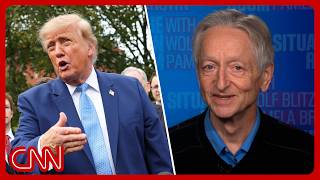
Trump has dismissed concerns about AI risk as a “hoax,” insisting the only guardrail needed is a “strong and smart, high IQ president.” When pressed on whether he has used AI tools himself, he offers vague answers and quickly changes the subject.
At the same time, he eagerly amplifies AI-generated images and videos that flatter his image—depicting himself as religious icons, heroic soldiers, or fantastical characters. That suggests he appreciates AI’s propaganda power, even if he shows little grasp of its deeper technical and societal implications.
For a deeper dive into Trump’s relationship with AI and how it’s perceived, you can read this related breakdown: an analysis of whether Trump actually understands AI.
Public anxiety and a crisis of competence
Polls show that Americans across the political spectrum are uneasy about AI’s rapid advance. In Georgia, Ossoff says Democrats, independents, and Republicans alike share concerns about both the local and global impacts of AI—from rising power bills driven by data centers to the existential dread of systems that might someday exceed human control.
Yet many feel that the political establishment is simply not equipped to handle this moment. When senior lawmakers openly admit they “don’t fully understand” AI, but still chair key committees overseeing technology and national security, it reinforces the sense that the country is barreling into a new era with leaders stuck in the last one.
That competence gap is part of what’s driving new interest in accessible AI education. For readers looking to get up to speed themselves, resources like this quick guide to actually learning AI in under 20 minutes can help close the understanding gap that many in Washington still struggle with.
When Congress won’t show up to work
All of this is unfolding against a backdrop of basic dysfunction on Capitol Hill. The House has been in session for barely 40% of weekdays this year, and the Speaker recently sent members home early rather than forcing votes on politically uncomfortable issues, including articles of impeachment against Defense Secretary Pete Hegseth.
That decision underscores a broader problem: even as AI, wars, and economic shocks demand serious legislative work, key institutions are operating on a part-time schedule and dodging hard votes. It’s hard to imagine a serious AI regulatory framework emerging quickly in that environment.
National security, war, and an overstretched military
AI isn’t the only area where the Trump administration’s decision-making is under scrutiny. New reporting has revealed the extent of damage to U.S. bases in the Middle East during Trump’s war against Iran, as well as the harsh conditions faced by deployed service members.
Families describe loved ones living under near-constant missile fire, sheltering in bunkers that literally shift under blast pressure, and relying on dwindling supplies of interceptor missiles. Yet the administration continues to downplay the scale of the conflict, at one point calling it “small potatoes.”
Senator Mark Kelly, a former Navy pilot and astronaut, says the administration cannot even articulate a clear mission statement for the war—let alone a coherent long-term strategy. That same lack of strategic clarity is what many fear will define the U.S. approach to AI: reactive, ad hoc, and driven by short-term politics rather than long-term security.
AI, democracy, and the free press
AI and democracy are deeply intertwined. The same tools that generate fake images and persuasive text at scale can be used to spread disinformation, harass critics, and undermine trust in institutions. That makes a free, independent press more important than ever.
Yet Trump has escalated his long-running war with the media by announcing a ban on several major outlets—including CNN, Politico, and MSNOW—from the White House. He explicitly described this as a “ban on the free press” and said it should go “as far as you can” until those outlets “straighten themselves out” to his satisfaction.
The White House Correspondents’ Association, currently led by a Fox News journalist, responded by reminding the public that the Constitution protects press freedom regardless of whether the president likes a particular outlet’s coverage. This isn’t just about journalists’ rights; it’s about the public’s right to know what their government is doing—especially when that government is making consequential decisions about AI, war, and national security behind closed doors.
Trump tried to revoke a reporter’s credentials once before, during his first administration. CNN sued, and a federal judge—whom Trump himself had appointed—ordered the credentials restored. Since then, however, Trump has appointed many more judges and taken more aggressive steps to intimidate or sideline critical coverage, from subpoenaing reporters’ records to pushing restrictive rules on Pentagon journalists.
What’s at stake in the next election
All of these threads—AI safety, conflicts of interest, national security, and attacks on the press—converge on a single question: who will control the terms of the AI era?
On one path, AI development is shaped primarily by a small circle of tech executives and politically connected investors, with minimal oversight and a government that treats regulation as a nuisance or a bargaining chip. On the other, elected leaders push for enforceable safety standards, independent oversight of frontier labs, and transparent decision-making about how AI is deployed in everything from defense to finance.
Senator Ossoff frames the coming elections as a referendum on which path the U.S. will take. He argues that winning key Senate races is essential to restoring checks and balances and forcing a serious, fact-based conversation about AI policy. Without that, he warns, the country will continue to “barrel into a technological revolution” with leaders who are either compromised, disengaged, or simply out of their depth.
Where we go from here
AI is not going away. Systems will keep getting more capable, more embedded in critical infrastructure, and more entangled with geopolitics and big money. The question is whether democratic institutions can adapt fast enough to keep the technology aligned with human values and public safety.
That will require more than speeches and open letters. It means:
Putting technically competent regulators and inspectors inside the labs that matter most.
Requiring transparency about major incidents, model capabilities, and safety practices.
Confronting conflicts of interest head-on, whether they involve campaign donations, foreign investments, or stock trades.
Defending an independent press that can investigate, question, and expose what’s happening behind the scenes.
AI will shape the next decade whether Washington is ready or not. The challenge now is to build a political system—and a leadership class—that understands the stakes and is willing to act accordingly.








Comments
No comments yet. Be the first to share your thoughts!